
No products in the cart.
Dietary Supplements for Cholesterol Management
A Deep Dive into What Works (and What Doesn’t)
High cholesterol is a significant concern for millions globally, often prompting individuals to explore various avenues for management. While lifestyle changes – a balanced diet, regular exercise, and maintaining a healthy weight – form the bedrock of cholesterol control, many turn their attention to dietary supplements. The allure of a simple pill offering a quick fix is powerful, but navigating the vast world of vitamins, minerals, multivitamins, and other supplements can be daunting.
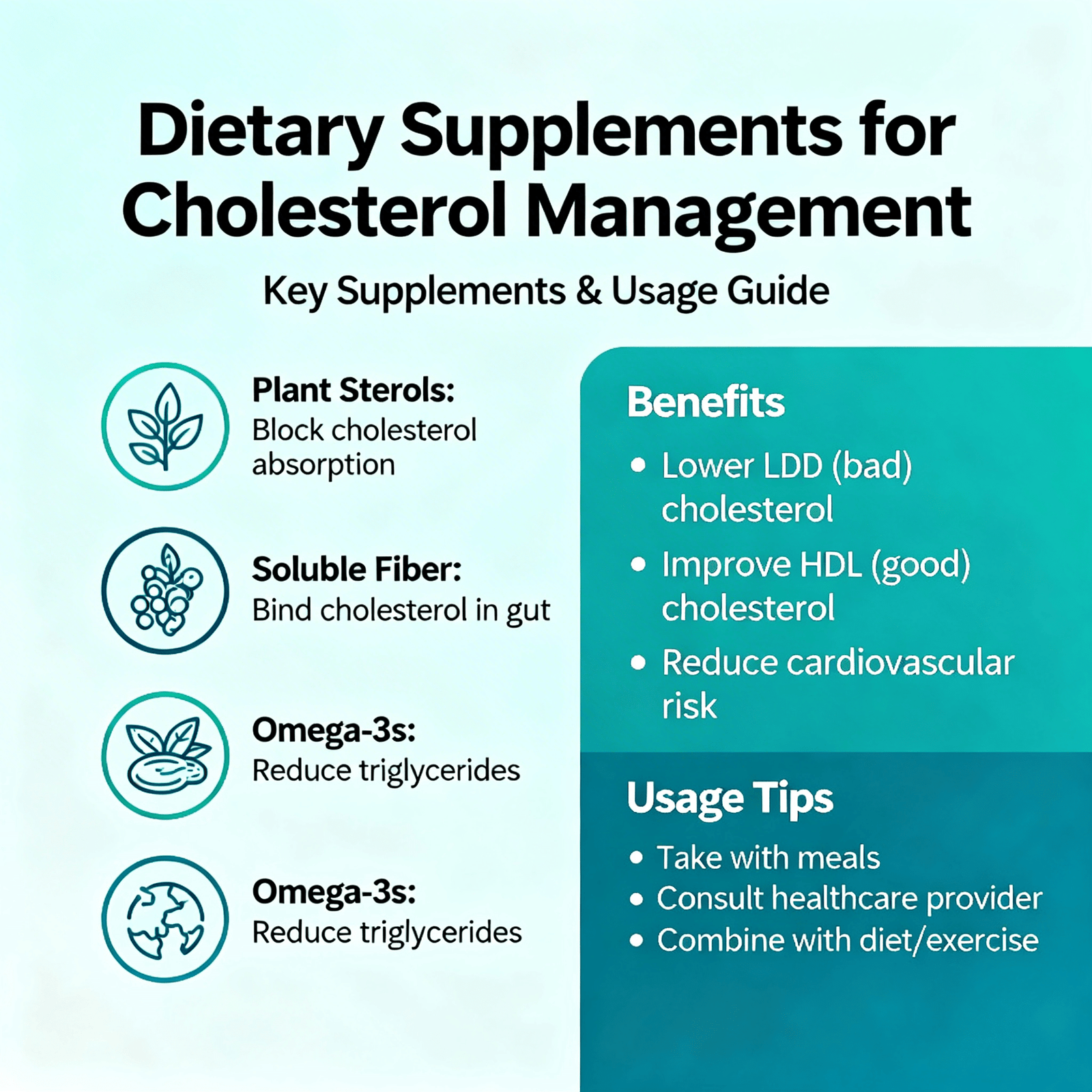
This article aims to cut through the noise, providing a descriptive, friendly, yet authoritative analysis of whether any dietary supplements are genuinely worth a try for managing cholesterol, focusing on their role in overall health and healthcare. We’ll explore the science, separate fact from fiction, and empower you with the knowledge to make informed decisions for your health.
Understanding Cholesterol: The Basics and Why It Matters for Your Health
Before we delve into supplements, it’s essential to grasp what cholesterol is and why managing it is crucial. Cholesterol is a waxy, fat-like substance found in all your body’s cells. It’s vital for many bodily functions, including producing hormones, vitamin D, and substances that help you digest food. However, too much of the “wrong” type can pose serious health risks.
There are two main types of cholesterol:
- Low-Density Lipoprotein (LDL) Cholesterol: Often dubbed “bad” cholesterol, high levels can lead to plaque buildup in your arteries (atherosclerosis), narrowing them and increasing your risk of heart attack and stroke.
- High-Density Lipoprotein (HDL) Cholesterol: Known as “good” cholesterol, HDL helps remove excess cholesterol from your arteries, transporting it back to the liver for removal from the body. Higher levels are generally protective for heart health.
Managing your cholesterol levels is a cornerstone of preventive healthcare. While diet and exercise are primary tools, the search for additional support often leads people to consider various dietary supplements.
The Appeal of Dietary Supplements in Modern Healthcare
In an age where information is abundant and self-care is prioritized, dietary supplements have become a significant part of many people’s health routines. For those looking to manage cholesterol, the appeal is understandable:
- Perceived Natural Solution: Many view supplements as a more “natural” alternative to prescription medications.
- Convenience: Taking a pill can seem simpler than overhauling an entire lifestyle.
- Proactive Health Management: Individuals often seek supplements to proactively support their health, even before specific issues arise.
- Marketing Influence: The supplement industry is vast, with compelling marketing often highlighting potential benefits.
However, the critical distinction lies between a perceived benefit and a scientifically proven one. This is where a data-driven approach becomes invaluable. Let’s evaluate the evidence for specific vitamins, minerals, and other supplements that are often discussed in relation to cholesterol.
Vitamins and Minerals: Direct Impact on Cholesterol?
While vitamins and minerals are essential for overall health and well-being, their direct role in significantly lowering cholesterol levels is often misunderstood.
Niacin (Vitamin B3)
Niacin is perhaps the most well-known vitamin associated with cholesterol management. In prescription-strength doses, niacin can effectively lower LDL cholesterol and triglycerides, while raising HDL cholesterol.
- Evidence: Strong evidence supports prescription niacin’s ability to favorably impact lipid profiles.
- Considerations: Over-the-counter niacin supplements are typically much lower dose and less effective. High doses of niacin can cause side effects like flushing, itching, gastrointestinal upset, and liver damage. It should only be used under medical supervision.
Antioxidant Vitamins (Vitamin C, Vitamin E, Beta-Carotene)
These vitamins are often promoted for heart health due to their antioxidant properties, which theoretically could prevent LDL cholesterol from oxidizing, a process believed to contribute to artery plaque.
- Evidence: Despite initial promise from observational studies, large-scale clinical trials have generally not shown that supplementing with vitamin C, vitamin E, or beta-carotene prevents heart disease or significantly lowers cholesterol.
- Considerations: Getting these vitamins from a diet rich in fruits and vegetables is beneficial for overall health, but high-dose supplements haven’t proven effective for cholesterol and can sometimes have adverse effects.
Vitamin D
Some research suggests a link between vitamin D deficiency and higher cholesterol levels, as well as an increased risk of heart disease.
- Evidence: The relationship is complex. While vitamin D is crucial for bone health and immune function, direct evidence that vitamin D supplements specifically lower cholesterol in individuals without a deficiency is lacking. Correcting a deficiency can improve overall health, but its direct impact on cholesterol is not a primary mechanism.
Multivitamins
Many people take multivitamins as a health insurance policy to cover nutritional gaps.
- Evidence: Multivitamins are designed to provide a broad spectrum of essential vitamins and minerals for general well-being. They are not formulated as a specific cholesterol-lowering treatment. There is no significant evidence that taking a standard multivitamin will directly impact your cholesterol levels.
- Considerations: While they can contribute to overall health, they shouldn’t be relied upon for specific cholesterol management.
Minerals (Chromium, Magnesium)
Certain minerals like chromium and magnesium have been investigated for their potential roles in metabolic health.
- Evidence: While magnesium is important for hundreds of bodily processes, including blood pressure regulation, and chromium plays a role in glucose metabolism, robust evidence demonstrating their direct and significant effect on lowering cholesterol as a supplement is generally insufficient or mixed.
Key takeaway for vitamins and minerals: While essential for health, most vitamins and minerals taken as supplements do not directly or significantly lower cholesterol unless prescribed in specific forms and doses (like niacin) or to correct a severe deficiency.
Specific Cholesterol-Lowering Supplements: What the Science Says
Beyond general vitamins and multivitamins, several dietary supplements are specifically marketed for their cholesterol-lowering properties. Let’s analyze these with a critical eye, much like a designer evaluates user experience or a copywriter assesses messaging impact.
Plant Sterols and Stanols
These are substances naturally found in plants that are structurally similar to cholesterol. They compete with cholesterol for absorption in the digestive tract, reducing the amount of cholesterol that enters your bloodstream.
- Evidence: Strong scientific consensus supports their effectiveness. Consuming 2-3 grams per day can lower LDL cholesterol by 5-15%.
- Sources: Often found fortified in foods like margarines, orange juice, and yogurt. Supplements are also available.
- Considerations: Generally safe and well-tolerated.
Soluble Fiber (Psyllium, Oat Beta-Glucan)
Found in foods like oats, barley, apples, beans, and psyllium husks, soluble fiber forms a gel-like substance in the digestive tract, which binds to cholesterol and prevents its absorption, carrying it out of the body.
- Evidence: Robust evidence shows that increasing soluble fiber intake can significantly lower LDL cholesterol. For example, 5-10 grams of soluble fiber per day can lead to a 5% reduction in LDL.
- Sources: Easily incorporated through diet, but supplements like psyllium husk are effective.
- Considerations: Also beneficial for digestive health and blood sugar control. Ensure adequate fluid intake.
Omega-3 Fatty Acids (Fish Oil)
Omega-3s, particularly EPA and DHA found in fatty fish and fish oil supplements, are renowned for their cardiovascular benefits.
- Evidence: While excellent for reducing high triglyceride levels (another type of fat in the blood) and overall heart health, their direct impact on lowering LDL cholesterol is less pronounced and sometimes can even slightly increase it in some individuals. They primarily reduce the risk of cardiovascular events, especially in people with high triglycerides.
- Considerations: Supplements are widely available; however, high doses should be discussed with a healthcare professional due to potential effects on blood clotting.
Red Yeast Rice
Red yeast rice is a traditional Chinese medicine product created by fermenting rice with a specific type of yeast. Some preparations contain monacolin K, a compound chemically identical to lovastatin, a prescription cholesterol-lowering drug.
- Evidence: Products containing significant amounts of monacolin K can effectively lower LDL cholesterol.
- Considerations: The FDA views red yeast rice containing monacolin K as an unapproved drug. There are significant concerns about quality control, purity, and standardization, with varying amounts of active ingredient and potential contaminants (like citrinin, which is toxic to kidneys). Side effects are similar to statin medications, including muscle pain and liver issues. Should only be considered under strict medical guidance.
Berberine
An alkaloid extracted from various plants, berberine has gained attention for its potential to lower cholesterol and blood sugar.
- Evidence: Early research and some human studies suggest berberine may help lower LDL cholesterol and triglycerides. The mechanisms involve activating an enzyme that helps remove LDL from the blood.
- Considerations: More large-scale, long-term human studies are needed to confirm its efficacy and safety. Potential for gastrointestinal side effects and drug interactions.
Garlic Extracts
Garlic has been used for medicinal purposes for centuries, including for heart health.
- Evidence: Studies on garlic and cholesterol have yielded mixed results. While some show a modest reduction in total and LDL cholesterol, the effects are generally small (around 5-10%) and often not statistically significant or clinically meaningful over the long term.
- Considerations: Generally safe, but can interact with blood-thinning medications.
Coenzyme Q10 (CoQ10)
CoQ10 is an antioxidant naturally produced by the body, important for cell growth and maintenance. While not a direct cholesterol-lowering supplement, it’s often discussed in the context of cholesterol management.
- Evidence: Statins, prescription drugs commonly used to lower cholesterol, can sometimes deplete the body’s natural CoQ10 levels, leading to muscle pain (myopathy) in some individuals. Supplementing with CoQ10 may help reduce statin-induced muscle pain, though evidence is inconsistent. It does not directly lower cholesterol.
- Considerations: Generally safe and well-tolerated.
1. Always Consult a Healthcare Professional
This is paramount. Before starting any new supplement, especially if you have high cholesterol or are taking other medications, consult your doctor or a registered dietitian. They can provide personalized advice based on your health status, medication interactions, and individual needs. Your healthcare provider is your most reliable resource.
2. Quality Control and Regulation are Lacking
Unlike prescription drugs, dietary supplements are not regulated by the FDA in the same rigorous way. This means that purity, potency, and even the accuracy of ingredient labels can vary widely between brands and products. What’s on the label isn’t always what’s in the bottle, or in the amount stated. This lack of standardization is a critical health concern.
3. Potential for Drug Interactions and Side Effects
Just because a supplement is “natural” doesn’t mean it’s harmless. Supplements can interact with prescription medications, leading to decreased effectiveness of drugs or increased side effects. For example, red yeast rice interacts similarly to statins, and garlic can thin the blood.
4. Lifestyle Changes Remain Paramount
No supplement can truly replace the powerful impact of lifestyle changes. A heart-healthy diet rich in fruits, vegetables, whole grains, lean proteins, and healthy fats, combined with regular physical activity, stress management, and avoiding smoking, are the most effective strategies for cholesterol management and overall health. Supplements should be viewed, at best, as an adjunct, not a substitute.
For creating clear and factual content, tools that ensure accuracy and efficiency can be highly beneficial. For instance, platforms like RapidTextAI can assist copywriters and content creators in generating well-structured and informative articles, helping to disseminate reliable health information effectively.
Conclusion: An Informed Approach to Cholesterol Management
Navigating the landscape of dietary supplements for cholesterol can be complex. While the market is flooded with options, a critical, evidence-based approach reveals that only a select few supplements demonstrate consistent, scientifically supported benefits. Plant sterols/stanols and soluble fiber stand out as the most robustly supported dietary supplements for directly lowering LDL cholesterol. Others, like omega-3s, offer significant cardiovascular benefits but primarily target triglycerides rather than LDL directly. Vitamins, minerals, and multivitamins are vital for overall health, but generally do not serve as standalone cholesterol treatments, with the exception of prescription-strength niacin under medical guidance.
The principles of data integrity, clear communication, and thoughtful design apply directly to personal healthcare decisions. Always prioritize a foundation of healthy lifestyle choices. Before considering any dietary supplements for cholesterol or general health, engage in an informed discussion with your healthcare provider. They can help you sift through the claims, assess potential risks and benefits, and integrate any suitable supplements safely into your personalized healthcare plan. Your health is an investment; make choices that are backed by credible evidence and professional advice.
Ready to stay informed with more evidence-based health insights and expert analyses? Subscribe Now to our newsletter for regular updates that cut through the noise and deliver actionable information directly to your inbox!



Leave a comment